Xander Fischer · 29 September 2026
Exploring Federated Moderation Workflows Across Volunteer-Managed Mastodon Instances
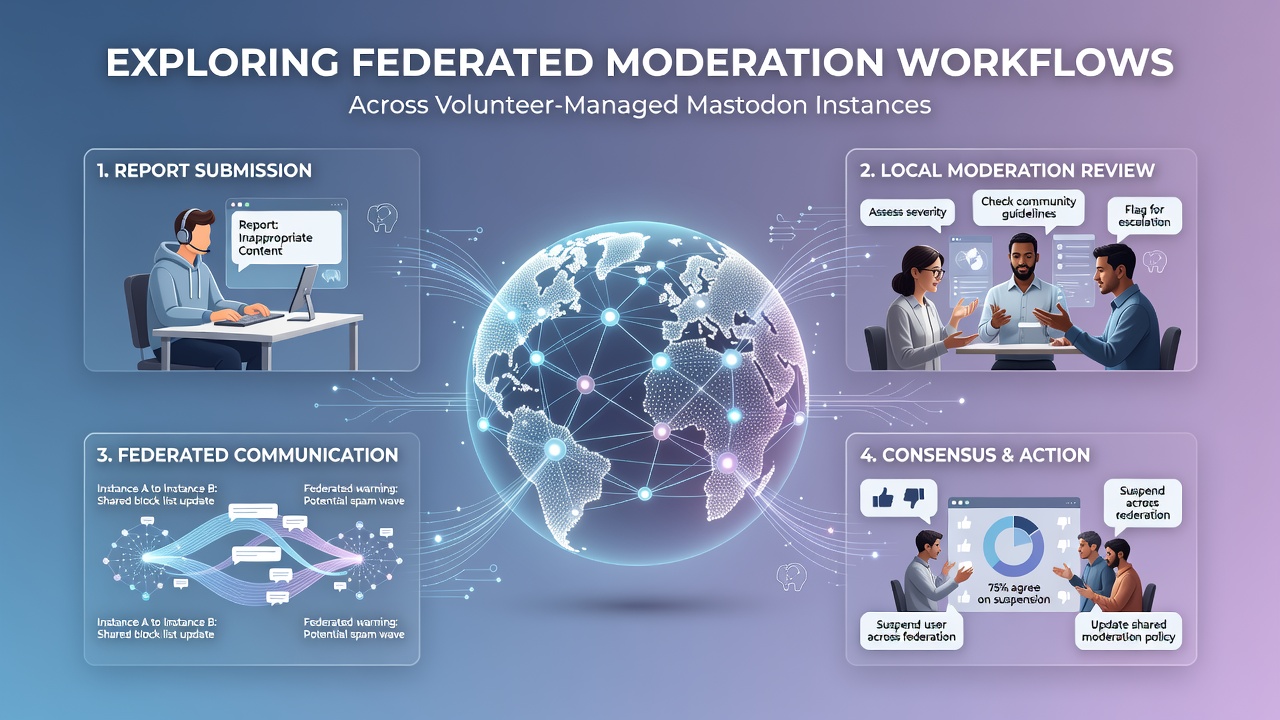
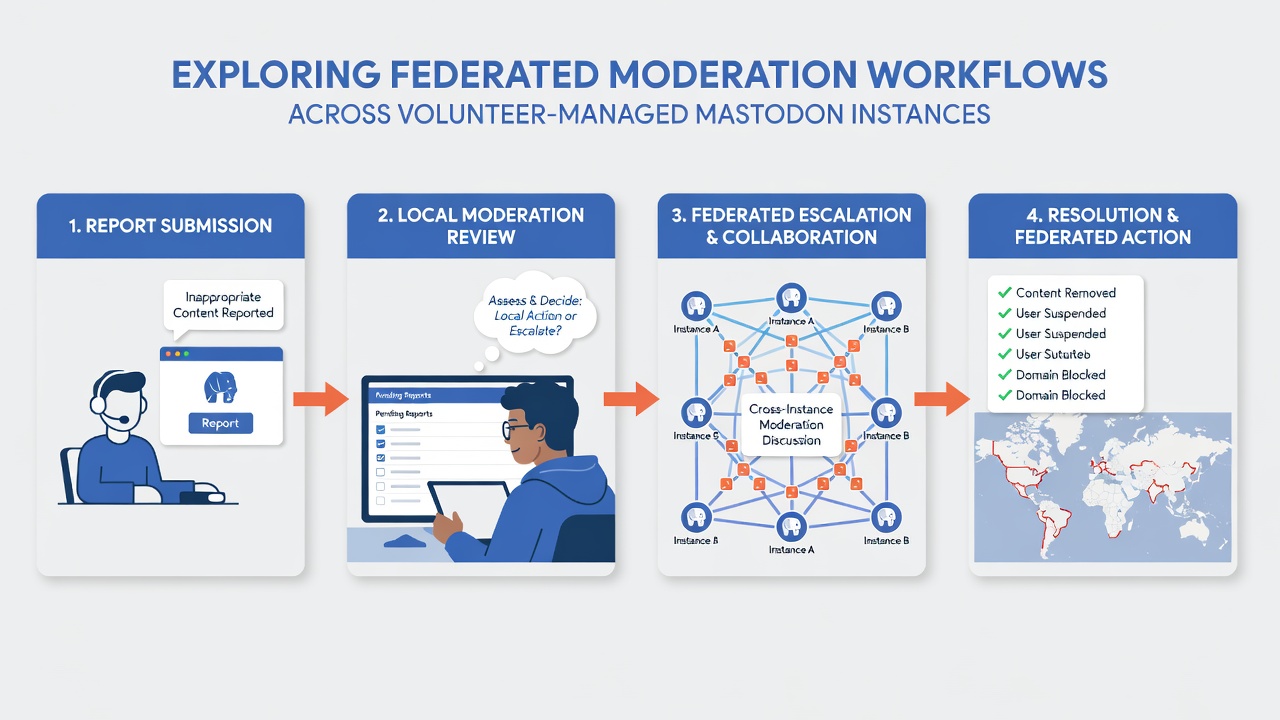
Volunteer-managed Mastodon instances operate within the ActivityPub protocol and coordinate content rules through a combination of local policies and cross-server communications; administrators exchange block lists, share reports on problematic accounts, and negotiate domain-level restrictions when individual user actions violate community standards. These workflows rely on built-in server tools that allow instance owners to suspend remote accounts, limit visibility of specific posts, or defederate entire servers when repeated violations occur. Data from the Mastodon project indicates that over 80 percent of active instances run on volunteer labor with no paid staff, which shapes how quickly decisions move from initial report to final action.
Core Components of Instance-Level Moderation
Each server maintains its own database of local users and applies rules through an administrative dashboard that displays reported posts alongside options for warnings, content removal, or account suspension. Moderators review evidence submitted by users, cross-reference activity timelines, and consult shared blocklists maintained by other administrators. The process often begins when a local user flags content originating from a remote server, after which the receiving admin evaluates whether the material breaches the instance charter or legal obligations in the host country. European Commission guidance on the Digital Services Act requires platforms above certain user thresholds to implement transparent appeal mechanisms, and many volunteer teams integrate these requirements into their existing ticketing systems even when their server falls below the formal threshold.
Cross-Instance Coordination Mechanisms
Federated moderation depends on informal networks and public blocklist repositories that circulate lists of domains known for hosting harassment or spam campaigns. Administrators import these lists into their servers through CSV uploads or API endpoints, then review entries before activating them to avoid unintended silencing of legitimate communities. When patterns of abuse span multiple servers, groups of admins form ad-hoc working groups on platforms outside Mastodon to discuss evidence and reach consensus on joint suspensions. A 2024 study from the University of California examined 150 public Mastodon instances and found that servers participating in at least one shared moderation channel resolved repeat-offender cases 40 percent faster than isolated instances. These channels operate on encrypted messaging apps or dedicated forums where participants verify each other's identities through cryptographic signatures before sharing sensitive user data.
Tools and Automation in Volunteer Settings
Many instances deploy open-source extensions that automate parts of the workflow, such as scripts that flag accounts with high volumes of reports or that match new sign-ups against known problematic domains. These tools integrate with the core Mastodon API and trigger notifications to volunteer moderators via email or chat. Because the software remains free and community-maintained, updates propagate through pull requests on public repositories rather than centralized release schedules. In September 2026 several major instances plan to test a new feature that allows selective federation with individual remote users even when the originating server remains limited, giving moderators finer control without full defederation. Observers note that such granular options reduce the collateral impact on users who have no connection to the problematic accounts on their home server.
Challenges Unique to Volunteer Teams
Time zone differences and varying levels of technical expertise among volunteers create delays between report receipt and resolution. Some instances publish public moderation logs that document each decision and its rationale, allowing users to understand patterns and appeal outcomes. Others keep logs private to protect reporter identities. Legal requirements differ by jurisdiction; Canadian privacy regulations, for example, impose stricter consent rules on data sharing than those in the United States, forcing cross-border moderation groups to redact certain fields before exchanging information. When an instance grows beyond a few thousand users, the volunteer moderators often recruit additional team members through public calls on the local timeline, yet retention remains inconsistent because the work involves exposure to disturbing content without compensation.
Case Examples from Active Servers
One European instance with 12,000 registered users documented its moderation queue over a six-month period and reported that 68 percent of incoming reports concerned remote accounts, while local policy violations accounted for the remaining 32 percent. The team resolved most remote cases through domain-level blocks after three or more independent reports arrived from different local users. Another instance based in Australia maintains a public spreadsheet of active domain blocks that includes notes on the original violation type and the date the block was last reviewed. These records help new moderators onboard quickly and provide transparency for users who wish to understand why certain content does not appear in their timelines.
Conclusion
Federated moderation on volunteer-run Mastodon instances combines local policy enforcement with distributed information sharing that allows each server to retain autonomy while participating in broader safety efforts. The workflows continue to evolve as new automation features and regulatory frameworks emerge, yet they remain grounded in the same principles of community governance that have defined the platform since its early development. Continued documentation of these processes supports both current administrators and future operators who seek to balance openness with safety across the decentralized network.